
Toxic Friendships: What They Are, Why They Hurt, and How to Heal
Losing a friendship can be deeply painful – haunting us to the core – especially when we do not know or fully understand the reasons for its failure. For many people, the ending of a friendship is as painful as the end of a romantic relationship, if not more so, precisely because it is less acknowledged, less ritualised, and often minimised by others. Toxic friendships feel particularly painful and uncertain, more often due to an unhealthy dynamic that has developed between two people.
We all want and need to feel seen, valued, and recognised. As human beings, we are fundamentally relational. We are shaped by connection and wounded by its loss. Many of us will go to great lengths to ensure we are loved, validated, and not abandoned – even at the expense of our own truth. Most of us have some experience of this.
A good friend provides validation and love, safety and recognition. We are valued for who we are, not for what we are. We’re treated as a person, not an object to be used or discarded. We feel treasured, respected, and above all, seen.
‘The Velveteen Rabbit’ is a wonderful chidren’s tale by Margery Williams, describing the process of becoming real (whole, or resiliant) through being loved. The curiuos velveteen Rabbit learns that,
“…by the time you are Real, most of your hair has been loved off, and your eyes drop out and you get loose in the joints and very shabby. But these things don’t matter at all, because once you are Real you can’t be ugly, except to people who don’t understand.”
“…once you are Real you can’t become unreal again. It lasts for always.”
This goodness we all want, through the process of being valued or consistently seen – and is what healthy friendship offers us.
When this experience is missing, distorted, or withdrawn, it can touch something very old within us.
Attachment, the Inner Child, and the Depth of Friendship
We form attachments to those we value. Our individual attachment styles develop through early childhood experiences and shape how we relate throughout our lives. These patterns do not only play out in romantic relationships – they are alive in friendships, families, workplaces, and communities.
Within each of us as adults, live the many ages and stages of our development, including what is often referred to as the inner child. We do not always relate to others from a consistent (adult) place of maturity, safety, and emotional regulation. At times, we are responding from younger parts of ourselves that learned how to survive relationally in a particular environment.
Effective therapy works to uncover the primal wounding that created our survival personality. Becoming aware of how this orientation pervades our lives, we can choose a response rather than react. Gradually we can change unwanted patterns of behaviour as adults, and begin our movement towards true authenticity.
From a Gestalt therapy perspective, these parts are not flaws to be eliminated, but creative adaptations to our early relational field. From a psychosynthesis lens, they can be understood as sub-personalities – aspects of us – or compensations – that once served a vital purpose but may now limit our freedom if left unconscious.
When a friendship ruptures, it can therefore feel disproportionately painful, because it is not only about the present loss. It resonates with earlier experiences of being unseen, unheard, or treated as an object rather than a subject.
Endings, Transitions, and Unfinished Emotional Business

Endings in our lives speak to transitions and rites of passage. They evoke earlier experiences of separation, grief, and loss, and often stir what remains unfinished. When a friendship ends suddenly or painfully, we may find ourselves emotionally frozen, replaying conversations, searching for meaning, or stuck in self-blame.
Existential therapy recognises that loss brings us face to face with fundamental human concerns: abandonment, meaning, freedom, responsibility, and mortality – the dread of non-being or annilation. A broken friendship may confront us with questions such as:
Was I ever truly known? Did I matter? Am I alone in this?
Such moments therefore, can awaken what is often seen in therapy as a primal wound – an essential need that was not adequately met in childhood and continues to seek recognition. Addressing such wounds helps us to understand why it is that we develop addictions or unhealthily dependancy in relationship.
How Toxic Friendships Impact Our Lives
Toxic friendships shake us to the core because they disturb our most basic needs for love, safety, and belonging. Many people seek relationship therapy or conflict resolution counselling because they notice painful relational patterns repeating despite their best intentions.
These patterns usually developed as ways to ensure connection at all costs. As Gabor Maté writes in The Myth of Normal, many behaviours that cause suffering are not signs of pathology, but adaptations to environments where our authentic needs could not be met.
We may unconsciously choose friends who resemble aspects of earlier painful experiences – like following an internal blueprint. There is often an unconscious hope that this time we will finally be seen, chosen, or valued. This repetition is not stupidity; it is the psyche’s attempt at repair, at reaching for wholeness. And no more is this apparent, than in romantic relationships
When awareness enters the picture, something shifts. What was previously acted out can now be reflected upon. We become less reactive, more responsive, and more able to live from an inner locus of validation rather than relying solely on external approval. We begin, with support, to address our own fundamental needs from within, rather than externally.
What a Healthy Friendship Feels Like
A healthy friendship is not perfect, but it is fundamentally safe.
- You feel emotionally safe and respected
- You can speak honestly without fear of abandonment
- Your feelings matter and are taken seriously
- There is mutual care, effort, and accountability
- You do not need to contort yourself to keep the relationship

“It makes such a difference to have someone who believes in you.” —Pooh, Winnie the Pooh
A good friend has your back. They know your warts and still love you. They listen to the point where you feel heard and valued. They do not disappear when things become uncomfortable. You can open your heart to them and be met with sincerity, warmth, understanding.
Being Careful with the Word “Toxic”
It is important to be careful when branding relationships – or people – as toxic. Context is everything. Sometimes we ourselves are acting from unexamined pain. After all, very few people consider themselves toxic, yet many people behave in toxic ways at times. It seems toxic people are always the ‘other’, rarely is it ourselves. Nevertheless, toxic relationships do happen, and hopefully we can learn more about ourselves too when they do.
Toxic behaviour often arises from deep shame, insecurity, or addiction – whether to power, control, validation, substances, work, sex, or approval. These behaviours are often attempts to regulate unbearable inner states. At their root is pain, or trauma.
Some people are very skillful at undermining, often projecting their faults on to others, making them feel inadequate, question themselves, their judgement, or even values. Hugely unsettling, we can feel violated and not know why, doubting ourselves to the very core, to the extent we feel gaslighted.
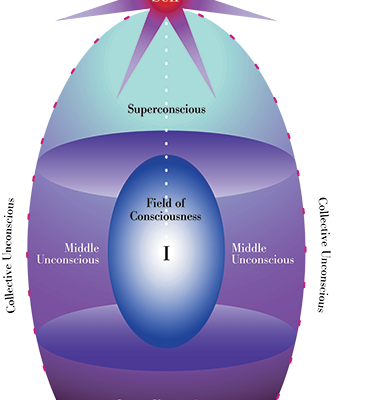
From a psychosynthesis perspective, such behaviours reflect parts of the psyche that have become disconnected from the deeper Self. We all carry such parts within us: the pleaser, the needy child, the bully, the victim, the rescuer.
“No human being is free from the strain of relating inner and outer reality.” -DW Winnicott, Play and Reality
Being human means being in relationship – with others and with ourselves.
How to Know When a Friendship Is Unhealthy
Rather than asking, “Is this person toxic?”, a more useful question is:
How do I feel when I am with them?
- Safe or unsafe?
- Seen or unseen?
- Respected or diminished?
- Free or controlled?
- Treated like an adult or infantilised?
Our feelings matter. In Gestalt therapy, emotions are understood as essential information arising at the boundary between self and other. Ignoring them often comes at a high cost. Often in therapy I am addressing the impact of this for clients. They may wonder how best to be themselves, if are they too much, or not enough – questions of how exactly to be in relationship. And part of the journey of truly becoming.
Boundaries, Co-dependency, and Self-Respect

Boundaries are particularly important for people with people-pleasing or co-dependent tendencies. Such patterns often developed early as ways to maintain attachment and avoid abandonment.
- Am I allowed to say no?
- Can I be distinct rather than blending in?
- Do I genuinely consent to this dynamic?
- Am I abandoning myself to keep the relationship?
Boundaries are not punishments. They are expressions of self-respect. Sometimes we need to be willing to risk rupture in order to live truthfully. Setting boundaries is part of the dance of connection. We need contact or intimacy, yet we want to invite it, or not. So learning to communicate ourselves better in relationship is critical, even an art of living authentically.
When Friendships Change or End
Sometimes friendships end because we have changed. Our lives, values, or worldviews may diverge. What once connected us may no longer exist. Accepting this can be painful, yet there is often a rhythm to life’s unfolding that deserves respect.
Existential therapy reminds us that authenticity requires us to live in alignment with our truth, even when doing so brings loss. As the saying goes, truth sets us free – though rarely without grief.
“Follow not me, but You!” Neitzsche
Power, Context, and the Wider Field
Context matters. We live in a world of social constructs. Power imbalances related to gender, culture, sexuality, mental health, wealth, status, or systemic discrimination profoundly shape relational dynamics. Not everything that feels personal is solely about each individual’s psychology. Taking responsibility whilst acknowledging the context within which we live is important.
After all, ‘No man is an island’ (John Donne). Some constructs need challenging, deconstructing even, and if not immediateley possible, at least some awareness. A compassionate response requires acknowledgement too, of what impacts upon our lives directly or indirectly.
Awareness allows us to step out of unconscious roles and begin rewriting our story.
A Personal Note from Me

“The untold want by life and land ne’er granted,
Now, Voyager, sail thou forth to seek and find.”— Walt Whitman
If you are struggling with a painful or confusing friendship, you do not have to navigate it alone. In my work, I support people in exploring attachment patterns, emotional boundaries, relational conflict, communication and the deeper meaning behind their experiences. Feel free to get in touch for a consultaion.
I draw on relational psychotherapy, psychosynthesis, existential and Gestalt approaches, and trauma-informed understanding to help clients move toward greater clarity, agency, and emotional freedom. I offer in-person therapy in London (Farringdon), as well as online
If something in this article resonates, you are very welcome to get in touch. Therapy can offer a safe, confidential space to reflect, heal, and find a way forward that honours who you are.
Alex Golding is a BACP registered & qualified psychosynthesis counsellor offering affordable rates as a private therapist in Farringdon, Streatham, London Bridge and Online. He is passionate about offering spiritually informed holistic and humanistic therapy to artists, men and women struggling with belonging, depression, meaning, or relationship anxiety in order to realise their fullest potential.
© 2026 Alex Golding Therapy

















Recent Posts