Buddhist Therapy London: Mindfulness Counselling & the Spiritual Approach
Conversational, relational, and grounded in forty years of practice - not a guided meditation session.
While my counselling draws on Buddhist philosophy and forty years of putting Buddhist humanism into action, our work together is conversational and relational. Buddhist therapy London with me does not guide or lead meditation, except occasionally and where desired during sessions. Instead, it supports you in discovering how, through developing personal awareness and acceptance, desired changes come about. Even in complex relationship situations, though compassionately acknowledging the forces at play within, conflict and suffering can be transformed.
Practices such as mindfulness, reflective journaling, time in nature and other contemplative habits can also enrich life outside our meetings and deepen the impact of therapy.
The Quiet Invitation to Live Congruently
Most of us keep two versions going: the one other people meet, and the one we are on our own. Therapy is one of the few places the two get to be in the same room. In the words of Nichiren Daishonin, “There are not two lands, pure or impure. The difference lies solely in our mind… When our hearts are calm, the light of enlightenment is revealed.” Healing begins when we recognise that wholeness lies not in a spotless mind, but in the way we live and relate.
At the same time, healing also requires an acknowledgement of the exterior environmental, cultural or global forces that impact us as individuals. Modern life rarely feels calm. We rush, strive, and scroll, while an undercurrent of longing or anxiousness persists - an urge for meaning deeper than our to-do lists or pressures to conform. Individuals also carry wounds at a primal level: historic or intergenerational trauma, struggles to belong, to be valued as people rather than objects. These are all factors impacting the individual psyche, and therapy cannot be fully healing or lasting without addressing them in some meaningful way. Buddhist therapy London-style, with me, certainly does not mean ignoring the context within which we exist.
Practical Buddhist Wisdom With Psychotherapy for Everyday Life
In my practice as a counsellor in London and online, I weave mindfulness counselling with warm, practical Buddhist wisdom. Together, these help you get back in contact with what is going on underneath the week. This is not about zoning out to become some perfect, Zen-like being, however. It requires connecting with our deeper truth, at times feeling the pain or the sadness, and what we wanted and did not get, so that parts of us that were shut down can be lived.
The art of life is not something we learn - we know it already, perhaps, deep down. It can be re-discovered, and exists to be lived, felt and expressed, not in the future, but here, now, as we are, so that we may begin to thrive. That can be a frightening place to go near. Going near it, slowly and without being judged for what is there, is usually what changes something.

Over forty years of Buddhist humanism and community leadership, and a good deal of ordinary life, have taught me that congruence is a living discipline. It asks for courage, patience and a willingness to see ourselves clearly, with unflinching honesty. Mindfulness counselling offers a safe space for this work, blending presence with practical action so that insight becomes lived reality. It is filled with the hope and potential of change and Self becoming.
Mindfulness Counselling: Beyond Technique
Mindfulness is more than a calm breathing exercise. It is a way of being alert to the present moment and alive to the ordinary. Rather than teaching formal meditation, I help you weave awareness into daily life: mindful conversations, purposeful pauses before decisions, and gentle noticing of body sensations and feelings. These practices grow naturally out of therapy and can be adapted to your personality and schedule.
You are already doing this work, whether or not it feels like it. My part is to listen, and to stay with you while you find out what is actually true for you. So mindfulness in this sense is vibrant and active - an awake participation in life’s unfolding, not a retreat from it.
Buddhist Therapy London: Meeting Modern Pressures
We live in a culture dominated by what Iain McGilchrist describes in The Master and His Emissary as the “left-brain emissary”: analytic, hurried, relentlessly productive. A Buddhist therapy approach restores balance by honouring intuition, embodiment and a deeper sense of meaning. Therapy becomes a dialogue about what truly matters: your purpose, values and the unique calling of your life.
Viktor Frankl wrote, “Life is never made unbearable by circumstances, but only by lack of meaning and purpose.” Together we explore that meaning - whether it arrives through creativity, service, relationships or quiet contemplation - while also tending to immediate emotional pain and practical concerns.
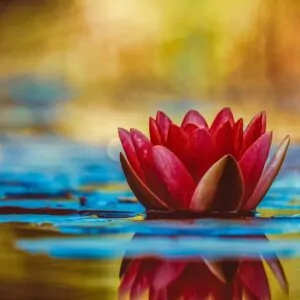
“When the water is calm, we can see the moon’s reflection.” - Nichiren Daishonin
This simple image captures the essence of therapy informed by mindfulness: not forcing calm, but allowing clarity to appear as the storms settle.

Practical Pathways Outside the Session
Because our sessions themselves are conversation-based, you may wish to experiment with personal practices that complement therapy:
- Personal meditation or quiet sitting - entirely self-directed, even a few minutes a day can foster steadiness
- Journaling or creative writing - a dialogue with your own heart and a way to witness growth over time
- Mindful walking or nature time - letting the body and senses reset amidst the natural world
- Intentional action - aligning daily choices with your values, from honest conversations to compassionate service
These practices are invitations, not assignments. Therapy supports you in discerning which ones feel nourishing and sustainable.
Psychosynthesis and the Higher Self
My primary training is in Psychosynthesis, a form of integrative and transpersonal therapy that recognises a higher Self within every challenge. Psychosynthesis draws from diverse modalities - Person-Centred, Gestalt, Jungian, Existential, and more - while welcoming the spiritual dimension as a natural part of human growth.
This broad palette allows me to tailor counselling to your needs, whether you are seeking clarity in relationships, healing from trauma, or exploring a deeper sense of purpose. The Buddhist perspective enriches this work, affirming that each person carries an inherent potential for awakening and creative expression.
Living the Questions
Rainer Maria Rilke encouraged us to “live the questions now.” In therapy we sit with those questions together: Who am I when I am not performing for others? What is mine to do in this world of noise and haste? How do I embody love and courage when life feels uncertain?
In facing these questions, mindfulness counselling becomes not only a path to symptom relief, but a way to inhabit the mystery of existence with greater freedom and joy.
The Courage to Face Life Square On
Mindfulness is not passive. It is the art of meeting life exactly as it is. Martin Luther King Jr. captured this when he said, “Faith is taking the first step even when you don’t see the whole staircase.” Buddhist therapy London-style, with me, invites the same courage: to step forward without a complete map, trusting that clarity unfolds through action.
When we work together, we focus not only on calming the mind but on engaging fully with relationships, work, creativity and the wider community. Awareness becomes a source of strength for meaningful change. We also pay attention to the body, gently noticing what thoughts or sensations lead us away from feeling and towards repetitive patterns of anxiety or depression. And we practice non-judgement, so what is within us may be felt or expressed in safety and with compassion, in order to allow what is, and grow forward.
Integrating the Whole Self
Decades of Buddhist practice have shown me that enlightenment is not somewhere “out there.” It is realised in the ordinary moments of a fully lived life. Psychotherapy at its best supports this integration, bringing the hidden parts of ourselves into dialogue until nothing essential is left outside the circle of acceptance. In this way, we can “awaken to the truth that has always been within our life,” as Nichiren Daishonin taught.
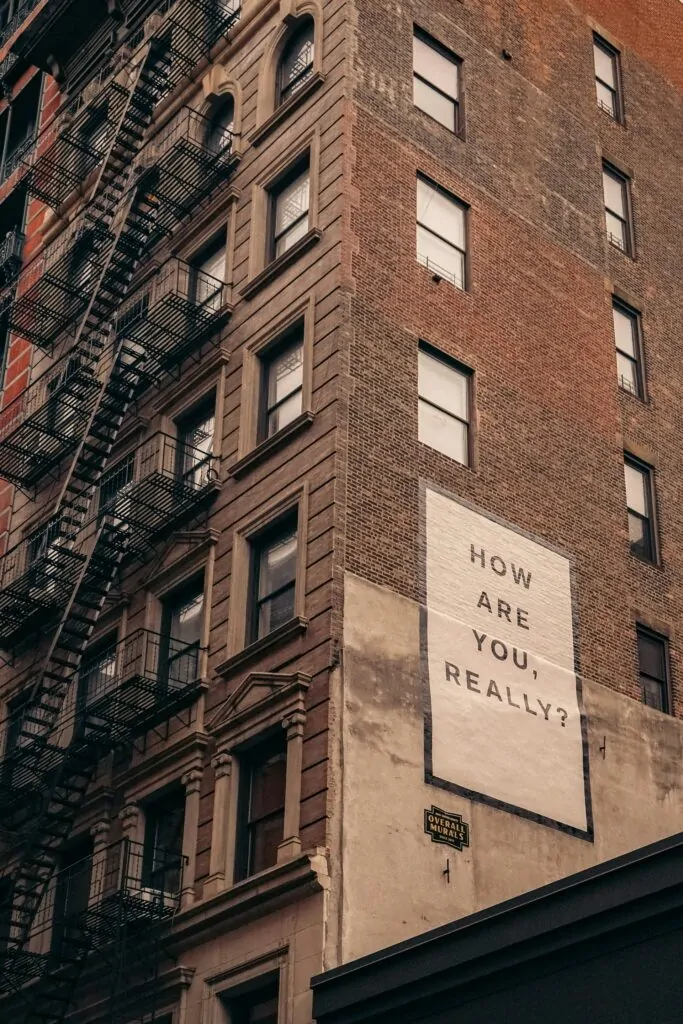
Buddhist leader Daisaku Ikeda reminds us, “Hope is a decision.” Therapy offers a space where that decision becomes possible, where presence meets despair and offers the first glimmer of new possibility.
The Right and Left of the Brain - and the Soul Between
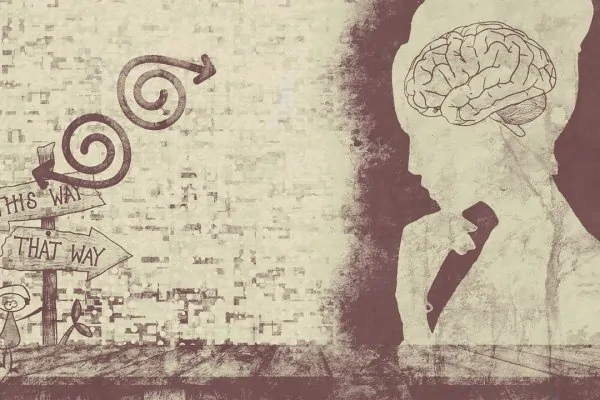
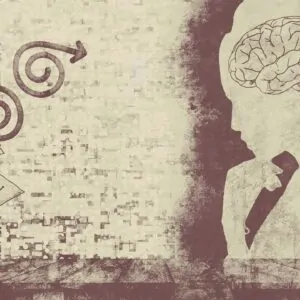
Neuroscientist Iain McGilchrist describes a world skewed toward the analytic left hemisphere, losing touch with the holistic, intuitive right. Many of us arrive burdened by relentless thinking and the demand to keep producing. A Buddhist therapy approach helps redress that balance, encouraging embodied awareness and a deeper listening to intuition, without abandoning the clarity and insight that reason provides.
This integration of reason and intuition, science and spirit, is where genuine healing unfolds. It is the meeting place of the measurable and the mysterious.
Finding Purpose and Calling
Viktor Frankl taught that “those who have a ‘why’ to live can bear almost any ‘how.’” In therapy we explore your unique “why” - a sense of meaning that may have been buried under years of survival and responsibility. Whether through art, service, relationship, or quiet acts of kindness, purpose is the flame that guides us through darkness.

As Tolstoy wrote in War and Peace, “The strongest of all warriors are these two - Time and Patience.” Together we cultivate both, recognising that transformation is a gradual unfolding rather than a sudden event.
Buddhist Therapy London: Companion, Not Guru
In Buddhist therapy London with me, you remain the expert on your own life. It is my role and privilege to accompany you, to listen with empathy and curiosity, and to help you clear the obstacles obscuring your inner light and joy. People often tell me that simply being truly heard allows a profound shift - one that formal techniques alone cannot achieve. This is the value of a relational approach to psychology.
With a background in the creative arts and a lifetime of Buddhist community leadership, I bring a relational depth and flexibility to this work. It supports men, women and young people alike in realising their potential and overcoming limitations. Mindfulness counselling in this sense is about presence and partnership, not instruction.
Everyday Practices That Support Therapy
Between sessions, you may find some of these helpful:
- Creative expression - painting, music, or movement as a way of embodying insight
- Compassion in action - small daily gestures of kindness that reinforce connectedness
- Reflective reading - spiritual or philosophical works that nourish the mind and heart
- Community engagement - finding supportive groups or service projects that echo inner values
- Vision - developing a vision for your life that embodies greater purpose, value or meaning
Each practice becomes a doorway to the deeper Self Psychosynthesis describes - a Self that is not an abstract ideal, but a living presence within your own experience.
Why This Matters Now
We live amid global uncertainty, ecological crisis, and cultural polarisation. Many feel the ache of disconnection - from others, from nature, even from themselves. Mindfulness counselling offers a way to respond: not by turning away, but by meeting the world with an open heart and a steady gaze, starting by re-connecting with Self.
As Shakespeare wrote, “This above all: to thine own self be true.” In therapy we explore what that truth means for you today, in the midst of family, work and the pressures of modern life.
Hope and the Possibility of Change
Gabor Maté reminds us that trauma is not what happens to us, but what happens inside us. The good news is that what happens inside can be healed. Through a compassionate relationship, new neural pathways and new possibilities of being emerge. Healing is not just possible; it is the natural movement of life when the right conditions are met.
In my experience, the combination of Buddhist wisdom and Psychosynthesis provides fertile soil for this transformation. Together we cultivate awareness, courage and a deepening sense of interconnectedness that continues long after therapy concludes.
Worth reading
- Man’s Search for Meaning - Viktor Frankl
- The Master and His Emissary - Iain McGilchrist
- Care of the Soul - Thomas Moore
- The Heart of the Buddha’s Teaching - Thich Nhat Hanh
- Unlocking the Mysteries of Birth and Death: A Buddhist View of Life - Daisaku Ikeda

Closing Invitation
Mindfulness counselling, enriched by a Buddhist therapy approach, is ultimately about living with integrity and aliveness. It is about recognising, as Buddhism teaches, that “When we change, the world changes. The key to all change is in our inner transformation.” (D.Ikeda)
If you are ready to start on this, or are simply curious, I welcome you to get in touch for a consultation - whether you are in London or working with me online. Together we can uncover the inner light that has always been yours and help it shine into every corner of your life.
What to Expect
Format: Individual 50-minute sessions, weekly
Where: In person in Farringdon, London (recommended where possible), Streatham (Tuesdays, 9am - 3pm), or online for those based outside London
Starting out: A free 15-minute consultation is available first, if you’d like to ask questions before committing to a full session
Fees: £70 per session
Frequently Asked Questions
Does Buddhist therapy involve guided meditation in sessions?
Not as a rule. Our work together is conversational and relational - meditation is included only occasionally and where genuinely desired, not as a default technique.
Do I need to be Buddhist myself for this approach to help?
No. People come to this work from every background - the wisdom informs how I listen and hold the space, not a requirement for what you believe.
Is this the same as generic mindfulness-based therapy?
Related, but different. Generic mindfulness approaches often teach techniques. This draws on forty years of putting Buddhist humanism into action, and on psychosynthesis training.
Alex Golding
BACP-Registered Psychosynthesis Counsellor
Ready to Talk?
Ready to start, or want to ask a question first - either way, I’d be glad to hear from you.