The Inspiration Behind Psychosynthesis: Roberto Assagioli’s Vision
Not the only influence on how I work - but the one whose thinking made psychosynthesis itself possible.
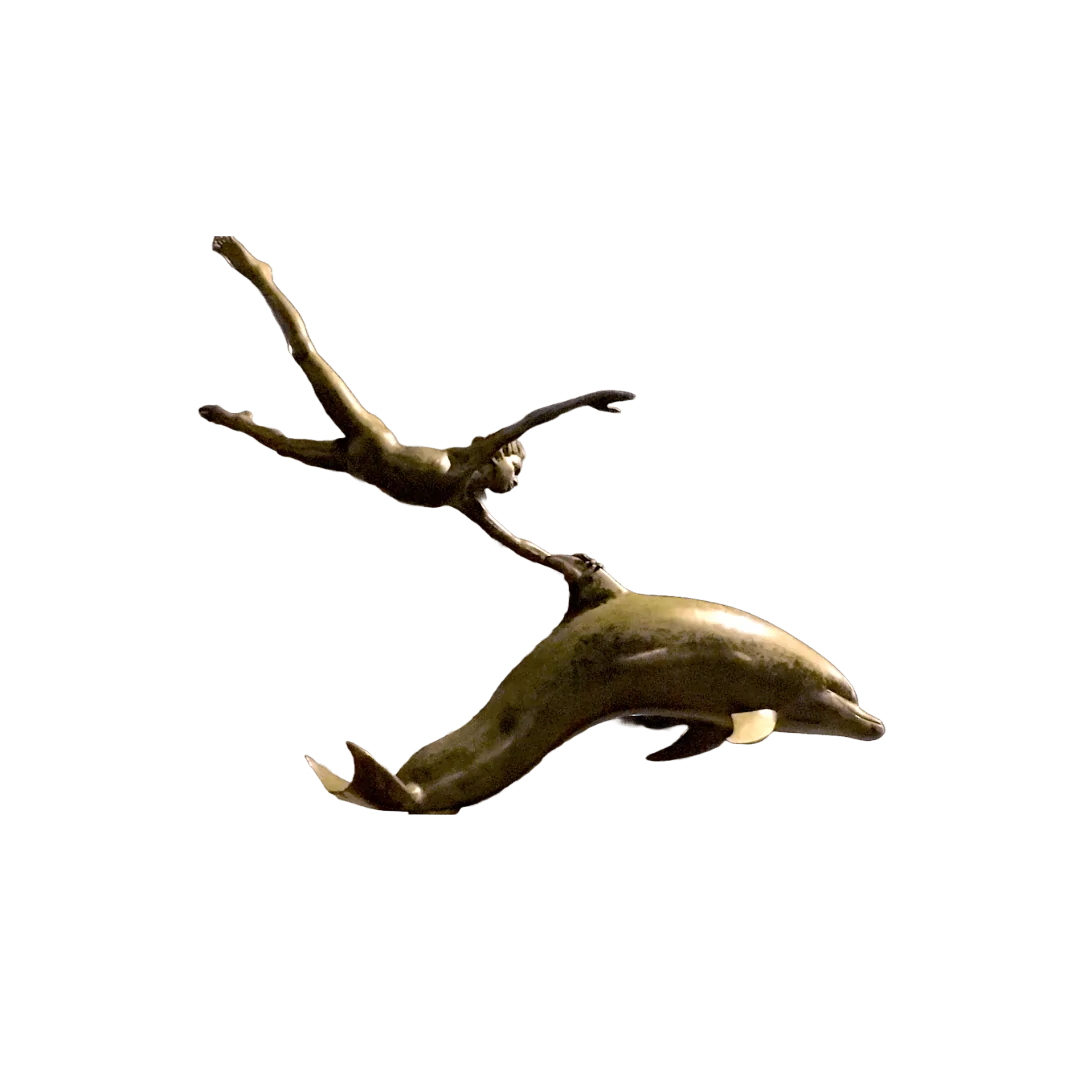
“In one of his letters Freud said, ‘I am interested only in the basement of the human being.’ Psychosynthesis is interested in the whole building. We try to build an elevator which will allow a person access to every level of his personality. After all, a building with only a basement is very limited. We want to open up the terrace where you can sun-bathe or look at the stars. Our concern is the synthesis of all areas of the personality.” - Roberto Assagioli, interviewed by Sam Keen, “The Golden Mean of Roberto Assagioli”, Psychology Today, December 1974
Plenty has shaped how I work - Daisaku Ikeda’s wisdom-filled writings, Buddhism and spiritual practice, my own psychotherapy mentor, and life experience as much as any technique. But underneath all of that sits one Italian psychiatrist writing over a century ago. If you’re curious about the inspiration behind psychosynthesis, it starts with him. Roberto Assagioli founded psychosynthesis therapy in the early 20th century - not by inventing everything in it, but by building the frame that lets a great deal of it work together.
That is the part I value most, and it is easy to miss. Psychosynthesis draws on Jung, on existential and humanistic thought, on the contemplative traditions. It is not fixed to one belief or one method. It is an open system, and a deliberately practical one, which means I can work with whatever actually serves the person in front of me and synthesise it under an umbrella broad enough to hold it. That brings freedom and creativity into the room instead of a procedure to be followed. No two people need the same thing, and nothing in this approach obliges me to pretend otherwise.
This piece is my attempt to properly introduce him - not as a historical footnote, but as the quiet source of an idea I’ve come to trust deeply.
What Is Psychosynthesis Therapy?
To understand the inspiration behind psychosynthesis, it helps to start here: at its core, this therapy is interested in the whole person. Assagioli compared the self to an orchestra, with each player or section adding a distinct flavour, theme or energy. We have many parts within us, sometimes playing together, sometimes vying with each other. Until the work begins:
“We are not unified…several subpersonalities are continually scuffling; impulses, desires, principles, aspirations are engaged in an unceasing struggle.” - Assagioli, Accademia Tiberina course, 1967, cited in Ferrucci, What We May Be, p31
Often unconsciously, our identification with certain subpersonalities becomes a barrier to feeling aligned with our deeper Self. Like an orchestra of different players, when these parts are in harmony, something like a symphony becomes possible. When they’re not, one part can dominate, or drown out the others entirely. In sessions, I find this image genuinely useful - it gives clients a way to talk about internal conflict without it feeling like something’s broken in them. Can this change, and can the unhelpful, repetitive patterns that follow - the ones that can feel like they have a will of their own - actually shift? To synthesise and harmonise, Assagioli believed we need access to our inner “observer”: the conductor in this analogy, or what he called the essential Self.
Therapy, from this view, is a process of strengthening our relationship with that innermost truth - the timeless part of us that’s unchanging, ever-present, and quietly powerful. Healing begins when the different parts of ourselves - feelings, thoughts, and bodily experience - are brought together, understood, and genuinely lived, through greater awareness, self-compassion, and agency.
Why Assagioli Left Freud
Assagioli did not arrive at this from outside psychoanalysis. He arrived from inside it.
He trained as a medical doctor and psychiatrist, studied Freud’s work closely, and was the man who introduced psychoanalysis to Italy. He knew exactly what he was leaving.
He never met Freud, but the two corresponded. In January 1910 Freud wrote to Jung that he had received “a very nice letter from Assagioli, which was, besides, written in impeccable German”, and told him he hoped the young Italian would carry psychoanalysis into Italy. Assagioli was accepted into the Zurich Psychoanalytic Association that same year and completed his medical thesis on psychoanalysis.
He did carry it into Italy. By 1911 he was publishing his objections to it.
His objection was not to psychoanalysis itself. It was to psychoanalysis as the whole account of a person. He found that account too reductionist - the unconscious treated as primarily a source of conflict and pathology, a basement full of what we had buried. The human psyche, he believed, could not be understood through its conflicts and repressed desires alone.
The Superconscious, or the Floor Above the Basement
So he added a floor. Alongside the lower unconscious, Assagioli described the superconscious: not a mystical claim, but the plain observation that we also carry what we have not yet lived. Capacities not yet used. Insight, creativity, compassion, a direction we are already leaning in without quite knowing it.
Freud’s unconscious held what had happened to us. Assagioli’s also held what was trying to happen - potential, and underneath the potential, spirit.
That is the part Freud’s map had no room for. A whole dimension of ordinary human experience - the sense of meaning, of being called, of belonging to something that does not begin and end with us - was either left off the map or explained away as something else wearing a disguise. Assagioli put it back. Not as a belief you have to sign up to, but as a fact about people that any honest psychology has to account for.
What he was really doing was bringing hope back into the room. Not optimism, and not any denial of how dark it can get - he was a psychiatrist and he saw plenty. But a psychology built only on drives and damage can return a person to functioning and no further. Assagioli thought we could hold both ends at once: the primal, hungry, sometimes frightening material, and the part of a person that reaches for beauty, meaning and something beyond themselves - what older traditions call divine, and what you can just as accurately call the height of what a human being is capable of. Neither end cancels the other. You do not have to decide which one is the real you.
“That means psychosynthesis is holistic, global and inclusive. It is not against psychoanalysis or even behaviour modification but it insists that the needs for meaning, for higher values, for a spiritual life, are as real as biological or social needs. We deny that there are any isolated human problems.” - Roberto Assagioli, interviewed by Sam Keen, “The Golden Mean of Roberto Assagioli”, Psychology Today, December 1974
That last sentence is the one I keep coming back to. No isolated human problems. Whatever you arrive with is connected to everything else about you, which is inconvenient if you want a quick fix, and a relief if you have been treated as a collection of symptoms.
Assagioli’s Egg Diagram
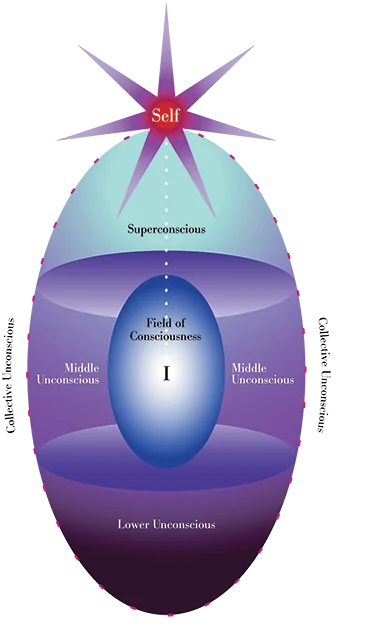
The diagram is an oval, and it maps a whole person rather than a problem.
At the bottom is the lower unconscious: what has been pushed down, the old hurts, the things we could not bear to look at. The middle band is what we can reach without much effort - yesterday, our habits, what we already know about ourselves. The clear circle inside it is narrower still: our field of awareness, what is actually in mind right now. The point at its centre is the “I”, the one doing the noticing.
At the top is the higher unconscious, and this is the part that makes psychosynthesis unusual. Not what we have buried, but what we have not yet lived. Capacities and directions that have never had room.
The star at the top is the Self, which Assagioli treated as something we are in relationship with rather than something we achieve. Its place at the top is not a hierarchy. It does not mean the Self is separate, or that the work is getting away from the bottom of the diagram or from the rest of it. The Self is the synthesis of all of it, which is where psychosynthesis gets its name.
The star is drawn at the top by convention, not because the Self is located there. The “I” at the centre is already a reflection of it. You could as reasonably draw the star anywhere on the diagram.
And the whole oval sits inside the collective unconscious, which is his way of saying none of this happens in isolation.
It is a map rather than a diagnosis. Nothing on it is a category anyone gets put into.
The Core Concepts Assagioli Left Us
- The Self and the Higher Self: Central to psychosynthesis is the “Self” - the core essence of a person. Assagioli distinguished between the personal self (or ego) and the Higher Self, a deeper, more transcendent aspect of who we are. Therapy helps people connect with and express this higher dimension, leading to a real sense of purpose and meaning.
- Integration of the Personality: Assagioli believed the psyche holds many subpersonalities - emotional, intellectual, instinctual parts, often in conflict. I help clients become aware of these parts first; understanding their existence and their roles is what makes integrating them into something more harmonious actually possible.
- Will and Personal Development: Assagioli placed real emphasis on developing the will - not just the capacity to act, but the ability to direct one’s life purposefully. Making choices aligned with your own values, rather than reacting on autopilot, is where conscious, intentional action begins. He treated the will as a faculty to be trained, like a muscle or an ear, rather than a moral quality you either have or lack - which is a far kinder idea than the one most of us grew up with.
- The Transpersonal Dimension: Assagioli expanded self-actualisation to include the transpersonal - spirituality, or the search for connection with something larger than ourselves. Psychosynthesis is holistic in this sense, honouring both the material and spiritual sides of being human.
How This Actually Shows Up in Sessions
Through psychosynthesis therapy, clients explore unconscious patterns, cultivate self-awareness, and do the kind of inner work that fosters real personal and spiritual development. In practice, this tends to mean:
- Holistic integration - uniting all areas of the personality for balance and growth
- Meaning and spiritual life - valuing higher human needs alongside biological and social ones
- Greater awareness and agency - becoming more congruent, self-aligned, and empowered
- Self-love, compassion and forgiveness - more compassion for the disowned parts of ourselves, moving from survival coping toward thriving
- Honouring soul, calling and purpose - finding deeper meaning and living with soul, becoming who we already are
- Complementary to other therapies - working alongside, not against, approaches like CBT

What Clients Often Find
- Greater self-awareness and understanding of what actually motivates them
- A felt sense of integration between mind, body, emotions, and spirit
- Access to more meaning in ordinary life, not just in crisis moments
- Real resolution of inner conflict and patterns that used to feel stuck
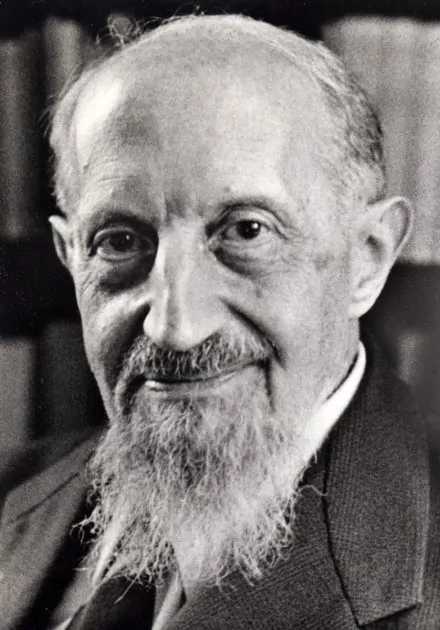
Who Was Roberto Assagioli? The Inspiration Behind Psychosynthesis
Roberto Assagioli (1888-1974) was an Italian psychiatrist, a contemporary of Freud and a colleague of Jung, and a pioneer in a specific sense: he was among the first to build a psychology around what a person might become rather than only around what had gone wrong. He believed we’re more than the sum of our minds and primal drives - and like Jung, he moved beyond the limits of traditional psychology to make room for the parts of the human condition that are harder to measure: spirit, soul, love, wisdom.
He held that people are capable of self-transcendence - of reaching a higher state of consciousness and functioning - and that this was not a spiritual extra but central to psychological health. His work continues to shape contemporary psychotherapy, particularly in human potential, transpersonal psychology, and integrative practice.
Psychosynthesis flourished in northern California through the late 1960s and ’70s, and has since become known as a compassionate, humanistic, transpersonal, and genuinely effective approach to psychology. It’s transformative, creative and spiritual, while staying fully grounded - a form of talk therapy carrying real hope and the promise of lived potential.
What the Work Actually Feels Like
The therapeutic process in psychosynthesis is dynamic and evolving. A first session, or an introduction to this way of working, often begins gently - exploring what’s currently going on for you emotionally and mentally, helping you gain insight into internal conflicts, unconscious patterns, and the situations you’re actually living through. From there, I might help identify the different voices or parts - in feeling, thought, or body - that may be creating confusion or inner conflict.
Once these subpersonalities or patterns become recognisable, psychosynthesis encourages a growing awareness of the higher, unifying Self. In practice, sessions involve you sharing, with me listening deeply - relaxed, present, non-judgemental, and at your pace. They can also be animated, lively, even humorous where that’s genuinely called for. It’s a relational, human encounter, and building trust and regard between us matters as much as any technique. There’s a gradual unfolding - themes present themselves, become conscious, and through that awareness, change becomes possible.
Techniques such as guided imagery, meditation, visualisation, active imagination, and reflective dialogue help clients connect with this deeper Self. As subpersonalities integrate and the will strengthens, people tend to experience greater psychological balance, a real sense of inner unity, and meaningful change.

The Becoming Self
Also central to understanding your true identity is the Self - what Assagioli called the “inner unity and centre of the personality.” Through exploring this deeper, more authentic Self, you can move beyond limited, ego-driven identities and behaviours, accessing more of who you actually are. Therapy offers a safe space for the hidden parts of your feelings, thoughts and personality to come into awareness. By letting more of yourself surface without judgement, we begin to compassionately integrate what wasn’t possible before - to become more whole, more fully yourself.
Being stuck in repetitive patterns is often a sign of over-identifying with just one part of your personality. In psychosynthesis, Self isn’t a fixed thing, but a dynamic process that emerges through self-awareness, alignment with your own values, and connection to something larger. There’s always choice, agency, and potential for change in any situation. I don’t see presenting problems as pathology to fix - more as a calling from somewhere deeper, toward change, or a more aligned way of living. Clients often come to experience real self-compassion and aliveness this way, by feeling into and actually living more of themselves.
Disidentification: A Key Tool
Disidentification helps you step back from thoughts, emotions, and roles, to observe them without attachment. It’s a creative process that releases false and limiting identifications, and supports a deeper, more authentic experience of Self. By disidentifying from passing states, you open to more inner freedom and clearer will.
In practice it is smaller and more ordinary than it sounds. It is the difference between “I am anxious” and “there is anxiety in me, and I am the one noticing it”. That gap is very small and it changes everything, because what overwhelms us is rarely the feeling itself - it is being so far inside the feeling that there is nobody left outside it.
I explore this in more depth in Spiritual Awakening or Breakdown? How Psychosynthesis Therapy Helps.
Spirit and the Transpersonal
Counselling in psychosynthesis includes the transpersonal - higher dimensions of consciousness that go beyond the individual ego. Assagioli viewed spirit as a source of inner guidance, creativity, and transformation.
Bringing this dimension into therapy connects us with purpose and meaning beyond personal desires, into a felt sense of actually participating in life - whilst staying grounded in its realities. The rent, the body, the job, the conversation you have been avoiding for a year. The ability to actually have the feelings we have, rather than having to shut them down. This is not an escape upwards. A therapy that floats free of ordinary life is not much use inside one.
Assagioli’s colleagues later mapped these as two distinct lines of growth, the personal and the transpersonal, and much of the trouble people bring to therapy comes from one of them having quietly stopped moving. I have written about that separately in all spirit, no ground, and all ground, no meaning.
You are more than your personal history; you needn’t be defined by it. Soul - your authentic purpose and potential - often speaks through the very issues that bring you to therapy, calling the Self to awaken. As we work toward inner synthesis, connection with others, the wider world, and something larger tends to deepen. This spiritual dimension is, for me, the real inspiration behind psychosynthesis: not just a technique, but a genuine way of seeing what’s possible in a person. From this view, we’re continually becoming. Living with aliveness means integrating personal development with spiritual awakening and service - with more of ourselves in flow and available. The parts we had to banish allowed back in, accepted, and finally lived. That is also what makes real contact with another person possible, and it starts with the contact we manage to make with ourselves.
Further Reading
See also related articles in the Alex Golding Therapy Blog and Resources.
- Assagioli, R. (2007) The Act of Will. Amherst: Synthesis Center Press. (Original 1973)
- Firman, J. & Gila, A. (1997) The Primal Wound. SUNY Press.
- Firman, J. & Gila, A. (2002) Psychosynthesis: A Psychology of the Spirit. SUNY Press.
- Sorensen, K. (2023) Conflict, Crises and Synthesis - Introduction. kennethsorensen.dk
- Whitmore, D. (2000) Psychosynthesis Counselling in Action (2nd ed.). Sage.
If any of this resonates - whether the inspiration behind psychosynthesis speaks to you specifically, or you’re just curious what it could offer - I’d genuinely love to hear from you.
What to Expect
Format: Individual 50-minute sessions, weekly
Where: In person in Farringdon, London (recommended where possible), Streatham (Tuesdays, 9am - 3pm), or online for those based outside London
Starting out: A free 15-minute consultation is available first, if you’d like to ask questions before committing to a full session
Fees: £70 per session

Alex Golding
BACP-Registered Psychosynthesis Counsellor
Assagioli’s disidentification exercise is on the site as a guided recording: a disidentification practice, in two lengths, with the full transcript.
Ready to Talk?
Ready to start, or want to ask a question first - either way, I’d be glad to hear from you.